



09 Dec Unified Business Partner: The Proven Model Delivering Better Results for SMEs
For most South African business owners, outsourcing is a survival tactic. A tax practitioner here, a payroll company there, a marketing agency somewhere else. The idea is simple: divide responsibilities and reduce risk. The idea of working with one unified business partner often feels risky by comparison.
But research shows the current approach is not delivering what owners hope it will. Studies on South African SMEs highlight that the tax and regulatory compliance burden directly affects business survival, performance and growth, particularly for businesses that rely heavily on external service providers without internal coordination. Sources: South African SME tax compliance burden study (Durban):https://sajems.org/index.php/sajems/article/view/5589/3086
Deloitte South Africa commentary on SME tax compliance burden: https://www.deloitte.com/za/en/services/tax/perspectives/the-tax-compliance-burden-for-small-and-medium-enterprises.html
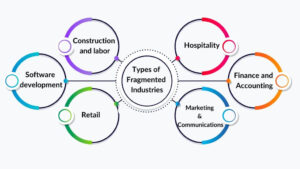 Fragmentation, once viewed as the safer structure, is increasingly recognised as a barrier to sustainable growth. Many business owners still avoid centralising their support because of what feels like the “one basket” risk. Nobody wants to hand their entire business over to one provider. It feels like risk concentration, like putting every egg in one container and hoping nothing falls. Yet evidence shows that spreading work across multiple providers does not create real diversification. It creates disconnection.
Finance teams do not talk to marketing. Payroll updates never reach the tax consultant. Compliance decisions are made separately from strategic planning. The consequences compound quickly: an incorrect VAT submission because your accountant never received an updated payroll record, a missed funding round because company documents were not aligned, or an audit query triggered because compliance files did not match financial reporting. Individually, these issues seem small. Together, they create a system that quietly undermines growth.
This is why the conversation about outsourcing needs to evolve. A unified business partner is not a single point of failure. It is a single source of truth. When every part of the business operates under one strategic framework, information moves faster, decisions carry deeper context, and risk is addressed before it becomes a crisis. A payroll change immediately informs tax planning. A compliance adjustment is incorporated into financial forecasts. Strategic decisions are anchored in real-time data instead of outdated spreadsheets.
The impact is not only operational. It is strategic. Fragmented support helps a business survive. Integrated support helps a business scale. These consequences of fragmentation are already visible. SARS has intensified compliance enforcement, collecting R293.7 billion through its compliance programme in the 2023/24 fiscal year, including R91.3 billion in debt from 2.6 million cases and R420 million from 895 000 outstanding returns. Source: SARS compliance results: https://www.sars.gov.za/media-release/compliance-efforts-of-sars-bear-fruit-and-underpin-the-positive-revenue-results-despite-the-tough-prevailing-economic-conditions
CIPC has also tightened expectations, issuing more requests for updated shareholder and directorship records. For SMEs already stretched thin, coordinating multiple providers in this environment is not only inefficient. It is dangerous.
South African SMMEs are not marginal in this landscape. Research shows they generate around R2.3 trillion in annual turnover, about 22 percent of formal sector revenue, and play a critical role in employment and economic participation. Source: SME turnover contribution: https://sajems.org/index.php/sajems/article/view/5589/3086
When businesses with that footprint struggle to coordinate compliance and operations, the cost is felt beyond their own balance sheets. The financial pressure of managing compliance through multiple service providers is also increasing. One South African study found that small businesses pay tax practitioners about R7 030 per year on average just for basic tax compliance tasks. Source: SA tax compliance cost study: https://journals.co.za/doi/abs/10.10520/EJC-c7f59b009
 For owners working with fragmented providers, that cost often increases without improving accuracy or alignment. When all functions sit within one connected system, the advantages become clear. Decisions are made faster because every discipline feeds into the same data ecosystem. Errors are reduced because one team oversees inconsistencies before they become liabilities. Risk decreases because regulatory and financial issues are addressed proactively. Strategy becomes stronger because decisions are no longer isolated events. They form part of a complete and cohesive picture. This model is not designed to replace specialist expertise. It is designed to integrate it. At TYJ Innovations, unified support means bringing financial management, compliance, administrative operations, digital presence and strategic development together under one roof with one point of accountability. The result is not dependency. It is alignment. Alignment that allows business owners to step away from constant firefighting and focus on scaling with clarity and confidence. TYJ Innovations → TYJ Services – TYJ Innovations
The broader business environment is shifting too quickly for disconnected providers to keep pace. Regulations are tightening. Compliance expectations are growing. Markets are more competitive than they have ever been. In this landscape, treating outsourcing as a series of unrelated tasks will not build resilience. It heightens vulnerability. The companies that thrive in the coming years will be those that view their business infrastructure as a single, living system and choose partners capable of building, maintaining and strengthening that system from strategy to scale.